See how we helped build real, innovative marketing solutions with Braze
Register for the Braze Innovation Series >

This guide highlights leading customer engagement platforms across the dimensions that matter most: omnichannel orchestration, mobile-first capabilities, real-time personalization, ease of use, AI features, implementation speed, and total cost of ownership (TCO).
Braze is for marketers who want better solutions. Stitch is for marketers who use Braze.
Choosing the right customer engagement platform can feel overwhelming when every vendor claims to be "the best." The reality is more nuanced—the best platform for your business depends on your specific needs, from the channels your customers prefer to how your team works day-to-day.
A customer engagement platform is software that enables businesses to orchestrate personalized, cross-channel communication such as email, SMS, push notifications, in-app messages, and web messaging. All based on real-time customer behavior and data.
Modern customer engagement platforms increasingly use AI to determine which message to send, when to send it, and which channel will drive the best outcome, moving beyond static rules toward adaptive, 1:1 personalization.
This guide highlights leading customer engagement platforms across the dimensions that matter most: omnichannel orchestration, mobile-first capabilities, real-time personalization, ease of use, AI features, implementation speed, and total cost of ownership (TCO). Rather than declaring a single winner, we'll help you understand which platform matches your business requirements.
Short on time? Here's what to know:
Customer expectations have shifted dramatically. People now expect brands to recognize them across every touchpoint, deliver relevant messages at the right moment, and respect their time with coordinated communication that doesn't feel overwhelming. Several forces are driving customer engagement platform adoption. These include:
Rising expectations for real-time personalization. Customers notice when a brand remembers their preferences, responds to their behavior, and adapts content based on their current context. Generic batch-and-blast campaigns increasingly fall flat.
Growth of mobile-first interactions. Push notifications, in-app messages, SMS, and WhatsApp have become primary channels for many brands, especially in retail, finance, media, and travel. Platforms should prioritize these channels rather than consider them an afterthought.
Need for unified orchestration across channels. When customers move between email, app, web, and messaging channels, they expect a connected experience. Fragmented systems that treat each channel separately create jarring customer experiences.
Increasing pressure on efficiency and automation. Marketing teams are being asked to do more with less. Platforms that automate repetitive tasks, reduce manual work, and enable self-service for marketers provide a significant operational advantage.
The shift toward AI-powered decisioning and content generation. Advanced platforms now use AI to optimize decisions like which message to send, when to send it, which channel to use, and what content will resonate most—moving beyond rules-based targeting to 1:1 personalization that continuously learns.
There’s a lot to consider when comparing customer engagement platforms, especially when some platforms are wildly different. As you evaluate, focus on these core elements:
Customer engagement platforms present themselves in different ways and it’s important to understand the major categories into which they fall and focus your evaluation on vendors designed to support your use case.
These platforms are purpose-built for orchestrating personalized journeys across email, SMS, push, in-app, web, and emerging channels. They excel at coordinating cross-channel messaging and responding to customer behavior in real time.
Top choices: Braze, Airship, Iterable, Leanplum, and MoEngage
Common use cases: B2C lifecycle marketing, mobile-first engagement, behavior-triggered campaigns, retention programs
Best for: Teams that need to coordinate messaging across multiple channels with a focus on speed and iteration
These are broad enterprise suites that integrate marketing automation, data management, advertising, and CRM. These platforms connect engagement to a wider ecosystem of experience tools, often spanning multiple departments and use cases.
Top choices: Salesforce Marketing Cloud, Adobe Experience Platform, and Oracle CX
Common use cases: Multi-cloud enterprise workflows, coupling marketing with a CRM and complex governance requirements
Best for: Organizations standardizing on a suite-based approach with structured permissions and cross-team collaboration
These platforms combine customer service, ticketing, conversational support, and messaging—bridging the gap between marketing engagement and customer support workflows.
Top choices: Zendesk, Sprinklr, and Intercom
Common use cases: Customer support automation, conversational messaging, unified service and marketing experiences
Best for: Teams that want engagement closely connected to service and support operations
These are tools designed for smaller organizations that have foundational automation needs, prioritizing ease of use and speed to value over enterprise-grade complexity.
Top choices: HubSpot, Klaviyo, and ActiveCampaign
Common use cases: Email-led nurture programs, SMB marketing automation, and ecommerce lifecycle campaigns
Best for: Small to mid-market teams that need quick wins without heavy technical overhead
Here's a look at leading customer engagement platforms, including their target users, primary strengths, and core features.
Braze is designed for real-time, mobile-first customer engagement, enabling teams to orchestrate personalized journeys across channels that include push, in-app, email, SMS, and WhatsApp. The platform excels at responding to customer behavior in real-time, making it an especially strong fit for B2C digital brands that rely on mobile engagement to drive growth.
Braze is often a choice for teams who want to coordinate cross-channel messaging without heavy day-to-day admin and development resources, and who want to experiment and iterate frequently on messaging programs.
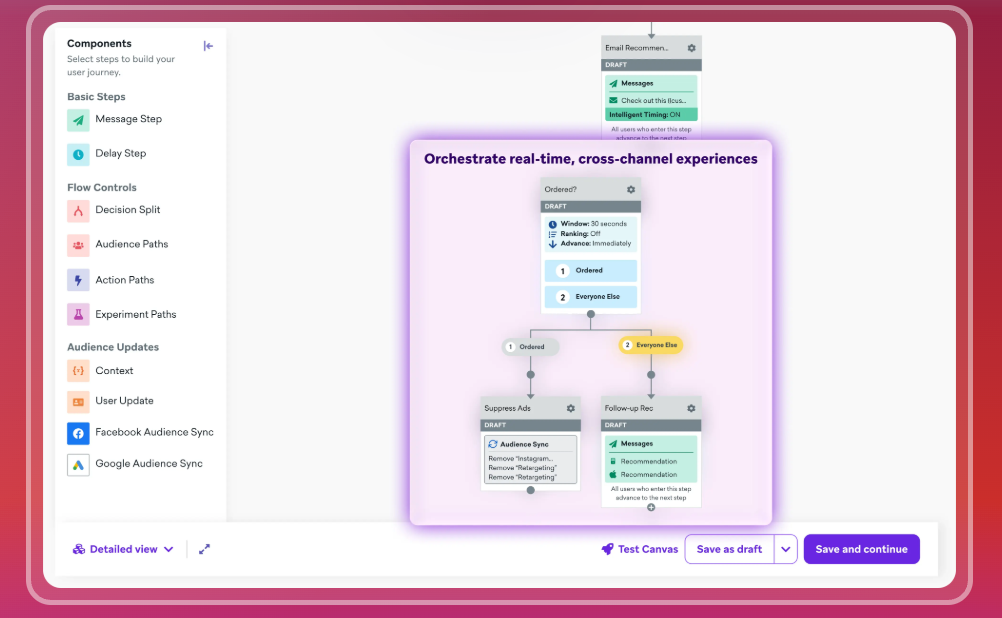
Core features:
Salesforce Marketing Cloud is built for marketing automation that integrates closely with the Salesforce CRM, Agentforce, and the broader Salesforce ecosystem. It supports multi-channel programs with structured governance, making it a common choice for organizations standardizing on Salesforce products.
The platform is frequently evaluated by teams that need marketing execution to sit inside a Salesforce-standardized environment with clear permissions and approval workflows across multiple stakeholders.
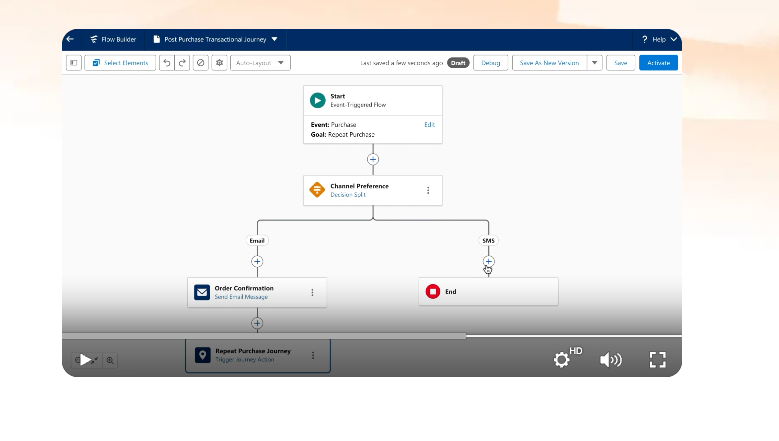
Core features:
The Adobe Experience Platform brings together tools for data, content, analytics, and journey execution, creating a shared ecosystem for planning, launching, and measuring customer experiences. The suite supports complex environments spanning web, app, email, and other channels.
Adobe is commonly evaluated when teams want engagement connected to broader experience workflows, with centralized permissions and approval processes for multiple groups managing different parts of the work.
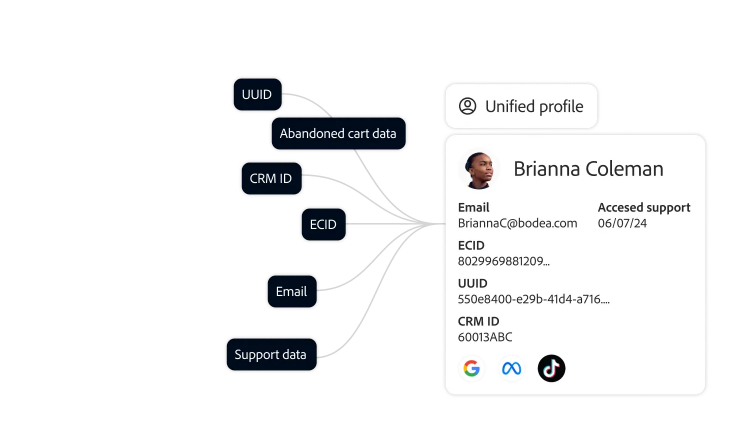
Core features:
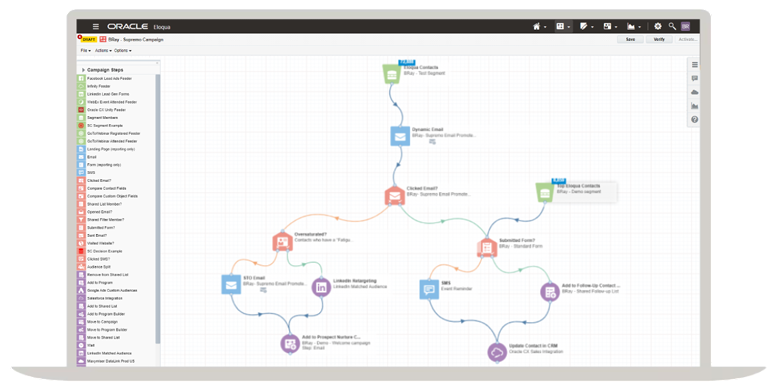
Oracle CX (Customer Experience) provides enterprise-grade marketing automation, data management, and engagement tools designed for large organizations with complex customer ecosystems. The platform integrates with Oracle's broader suite of business applications and databases.
Oracle CX is frequently evaluated by large enterprises that need robust data integration capabilities, multi-brand orchestration, and teams already standardized on Oracle infrastructure.
Core features:
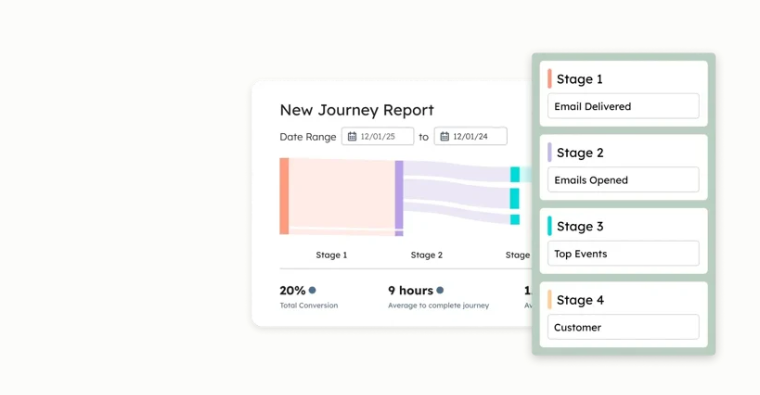
HubSpot offers marketing automation, CRM, and engagement tools designed for ease of use and quick deployment. The platform is particularly strong for inbound marketing, email nurture programs, and teams that want an all-in-one solution without complex setup.
HubSpot is frequently chosen by small to mid-market teams that need foundational marketing automation and want to get live quickly.
Core features:
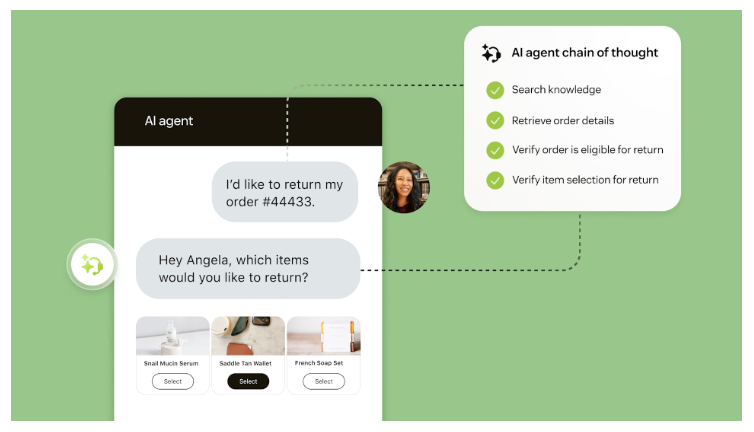
The Zendesk Resolution Platform combines customer service, support ticketing, and messaging in one platform, enabling teams to handle both service interactions and proactive engagement. The platform bridges traditional support workflows with conversational messaging.
Zendesk is commonly evaluated by organizations that want engagement closely tied to customer service operations.
Core features:
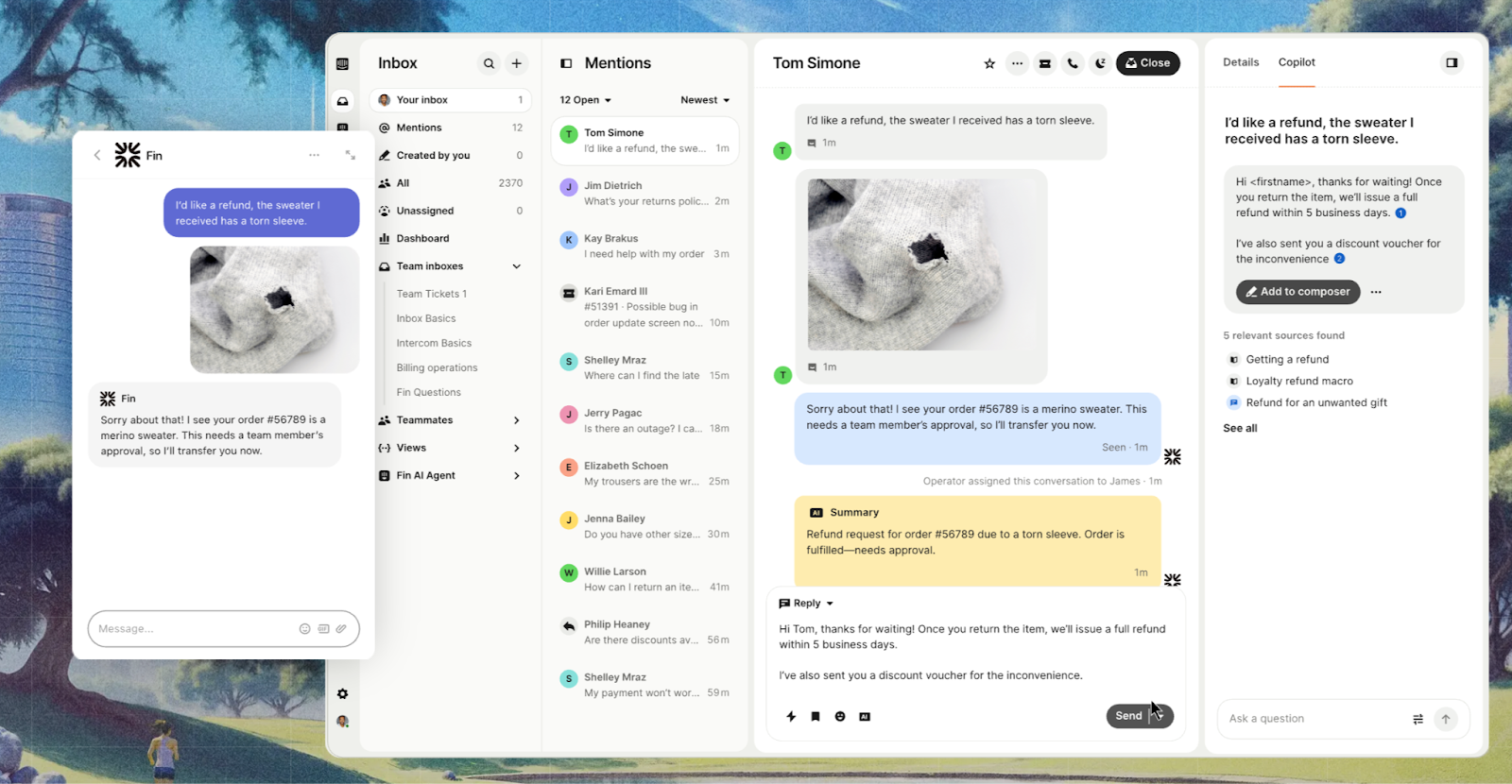
Intercom combines conversational support, proactive messaging, and customer engagement in one platform. The tool is designed for product-led businesses that want to communicate with customers inside the product experience through chat, email, and in-app messages.
Intercom is commonly evaluated by SaaS companies and digital products that prioritize conversational engagement and want to blend support, onboarding, and marketing messaging.
Core features:
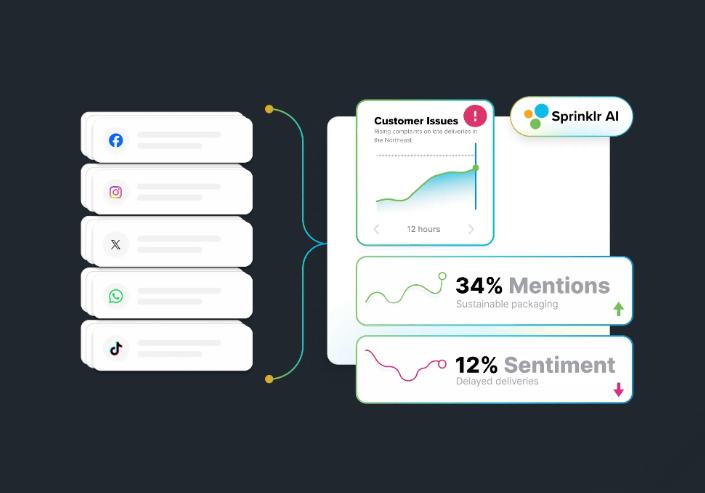
Sprinklr provides a unified platform for social media management, customer care, and engagement at scale. The platform handles complex workflows across teams, regions, and channels, with a focus on governance and compliance.
Sprinklr is frequently shortlisted by large enterprises managing global social presence and customer engagement across multiple brands.
Core features:
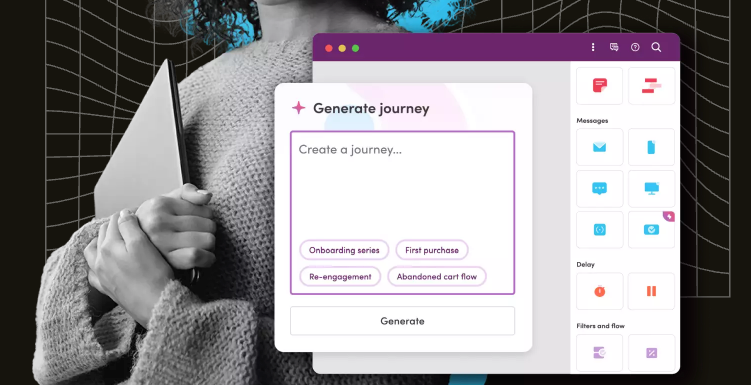
Iterable is a communication platform designed for cross-channel campaigns, with strength in email, SMS, push, and in-app messaging. The platform emphasizes workflow flexibility and experimentation for B2C marketing teams.
Iterable is commonly evaluated by growth marketing teams that want to coordinate messaging across channels with an emphasis on testing and iteration.
Core features:
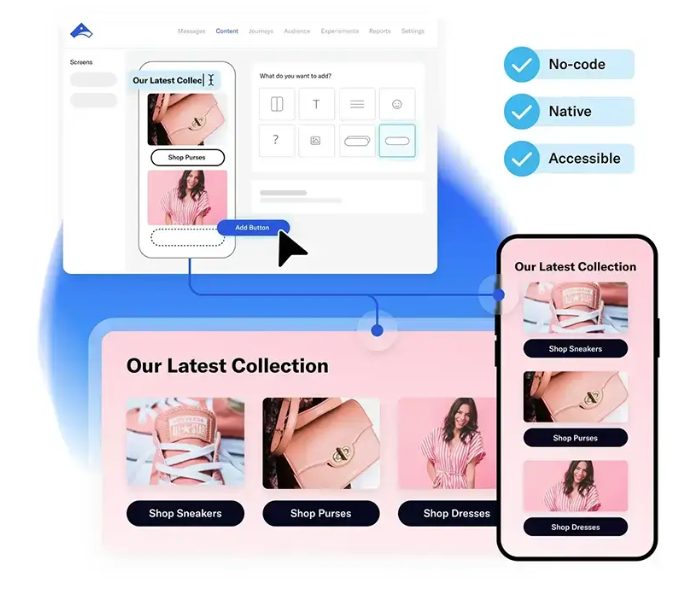
Airship specializes in mobile-first engagement, with deep expertise in push notifications, in-app messaging, and mobile wallet passes. The platform is built for mobile app publishers and brands where mobile drives the customer relationship.
Airship is frequently evaluated when push notifications and in-app messaging are primary growth channels.
Core features:
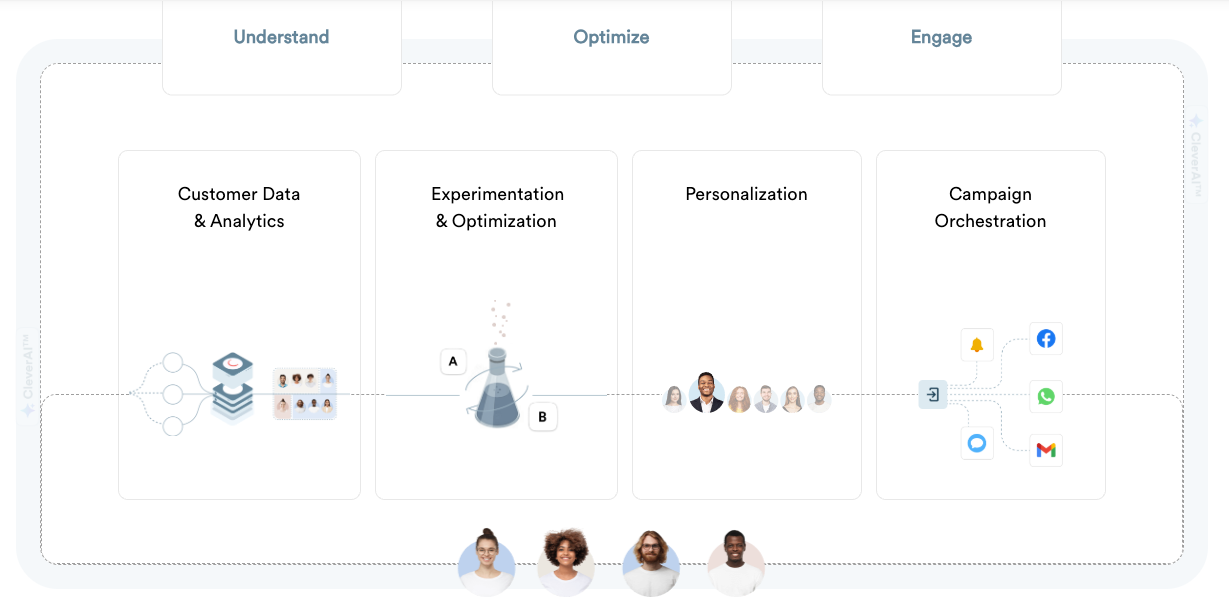
Leanplum (now part of CleverTap) focuses on mobile engagement and app optimization, combining messaging capabilities with A/B testing and app experience personalization. The platform helps mobile teams deliver contextual experiences based on in-app behavior and lifecycle stage.
Leanplum is frequently evaluated by mobile app teams that want to optimize both messaging and in-app experiences in a single platform.
Core features:
MoEngage is a customer engagement platform built for consumer brands, with strength in mobile-first campaigns, AI-powered personalization, and cross-channel orchestration. The platform emphasizes insights-driven engagement with predictive segmentation and automated campaign optimization.
MoEngage is commonly evaluated by consumer brands in retail, ecommerce, media, and fintech that need sophisticated personalization without enterprise-level complexity.
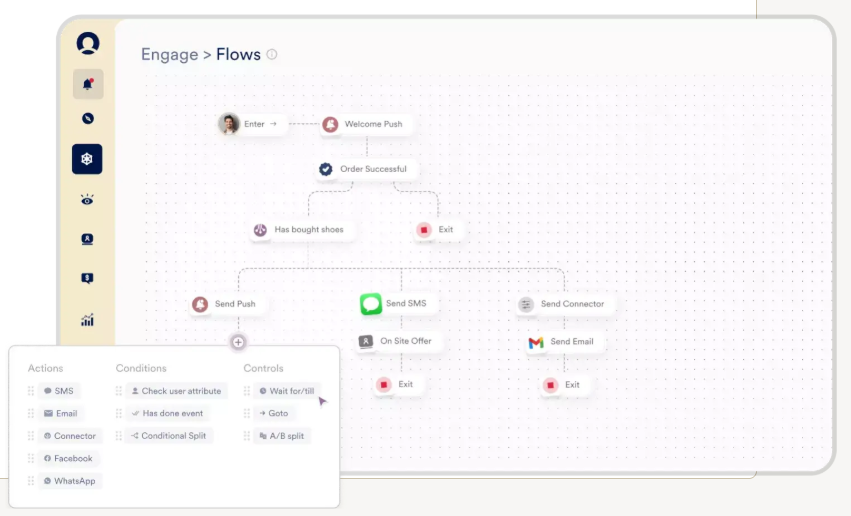
Core features:
ActiveCampaign combines email marketing, marketing automation, and CRM in a platform designed for small to mid-sized businesses. The tool is particularly strong for automated email sequences, lead nurturing, and sales pipeline management without requiring technical expertise.
ActiveCampaign is frequently chosen by growing businesses that want powerful automation capabilities at a mid-market price point.
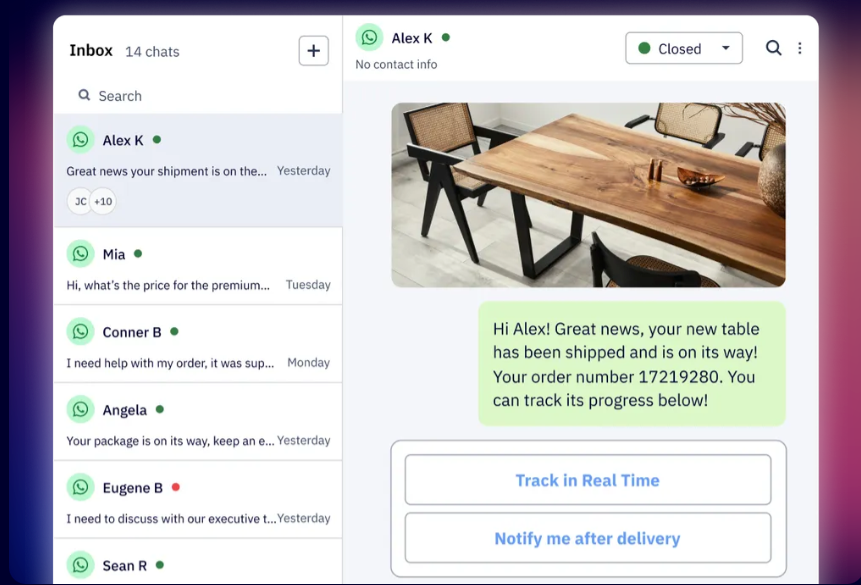
Core features:
Klaviyo markets itself as a B2C CRM, combining marketing and service, but with a focus on ecommerce and offering native integrations to Shopify, WooCommerce, and other commerce platforms. The platform excels at personalization based on shopping behavior, cart activity, and purchase history.
Klaviyo is commonly chosen by ecommerce brands that want strong segmentation and automation without enterprise-level complexity.
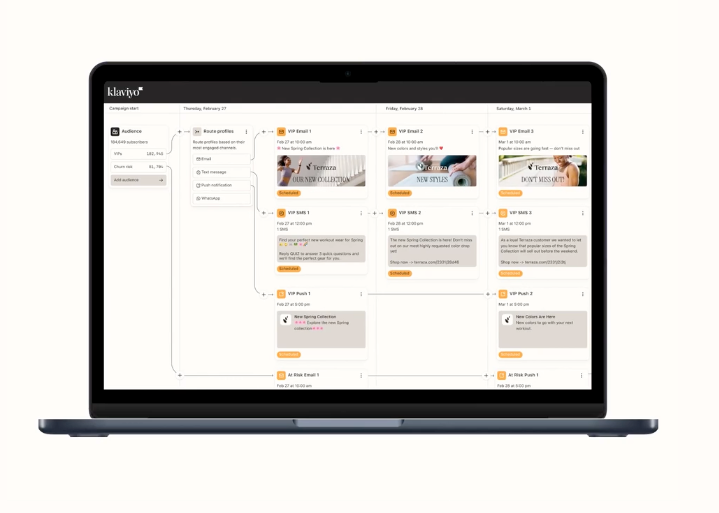
Core features:
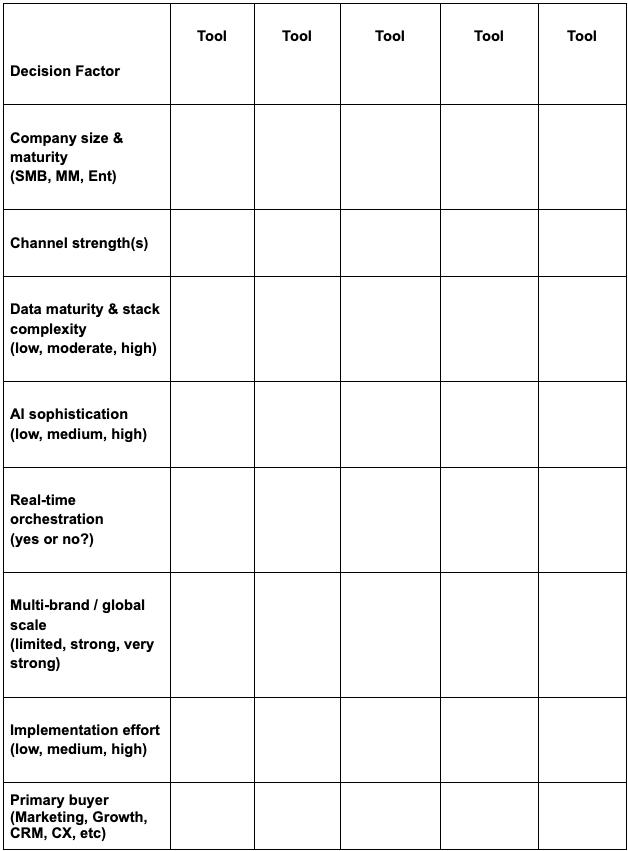
The right platform depends on several factors unique to your business. These include:
Company size and marketing maturity. Startups and small teams often benefit from platforms that prioritize ease of use and fast time-to-value. Mid-market and enterprise organizations may need platforms that support complex workflows, governance, and scale.
Channel mix and mobile dependency. If mobile is a primary growth channel and push notifications or in-app messages drive outcomes, platforms with mobile-first capabilities deserve close attention. If email dominates your strategy, platforms with strong email execution and deliverability become more important.
Data maturity and tech stack complexity. Organizations with modern data stacks—including customer data platforms, data warehouses, and real-time analytics—need platforms that integrate cleanly into those environments. If your data lives across multiple systems, look for platforms designed for flexible integration rather than proprietary data silos.
AI sophistication. Understand the level of AI available—from basic automation and A/B testing to intelligent automation to more advanced AI decision making using techniques like reinforcement learning. Platforms like Braze enable truly 1:1 personalization at scale via the BrazeAI Decisioning StudioTM.
Need for real-time orchestration. Consider how quickly you need to respond to customer behavior. If time-sensitive triggers matter—like responding to cart abandonment within minutes or sending order confirmations instantly—real-time capabilities become essential.
International or multi-brand requirements. Managing multiple brands, languages, and regions adds operational complexity. Platforms with strong governance, permissions, and multi-brand support help prevent chaos as scale increases.
Implementation constraints. Be realistic about your team's bandwidth and technical skills. Some platforms can be implemented quickly with minimal technical support, while others require months of work across data, identity, channels, and governance.
You can use a framework like this to map how different options compare:
Getting live is only part of the story—time-to-value matters more. Here are a few factors that affect how quickly you'll see results:
The more complex the deployment, the longer the implementation timeframe might be to set yourself up for success. Consider running a pilot for a simple use case to understand how quickly you’ll see value from a tool after implementation.
Total cost of ownership usually goes well beyond published pricing. It includes platform and licensing fees, implementation, training, and ongoing admin or account support—not to mention the opportunity cost of slow iteration when experimenting.
Platform pricing models vary:
What drives total cost:
Always request detailed implementation estimates and ask vendors about typical admin overhead for organizations similar to yours.
It’s an exciting time for customer engagement, as technology unlocks new capabilities for marketers.
It can sometimes be difficult to remain objective while selecting a new tool as you move between demos and sales calls. It’s also hard to take your time when there’s pressure to make a change. Here are a few pitfalls to watch out for during your evaluation:
There are many good options, and the right choice depends on your business needs, technical environment, and team structure. Platforms like Braze support teams of all sizes and are trusted by major B2C brands, especially for use cases where push notifications and in-app messaging drive customer relationships, real-time personalization matters, and you need to iterate quickly without heavy development overhead.
As you assess your needs, think about the top 5-10 customer moments that drive revenue or retention. Think about which channels matter most for those moments, and assess your data readiness and integration requirements. Then, take a realistic approach to implementation timelines based on your organization and calculate the total cost of ownership across 12-24 months’ time. When you match platform strengths to your specific requirements, the right choice becomes clear.
The best customer engagement platforms in 2026 include Braze for real-time mobile-first engagement, Salesforce Marketing Cloud or Adobe Experience Platform for ecosystem-based integrations, HubSpot for mid-market ease of use, and Klaviyo for ecommerce-focused campaigns. The right choice depends on your channels, data maturity, and team structure.
When evaluating customer engagement platforms, focus on omnichannel orchestration capabilities, mobile-first messaging strength, real-time personalization, ease of use for marketers, AI and automation features, integration depth with your existing stack, realistic implementation timelines, and total cost of ownership beyond platform fees.
Omnichannel platforms coordinate messaging across multiple channels (email, SMS, push, web, social) but may treat all channels equally. Mobile-first platforms prioritize mobile experiences like push notifications and in-app messages as core capabilities, with other channels supporting the mobile relationship rather than competing with it.
B2C engagement typically requires real-time responsiveness, mobile-first capabilities, and high-volume personalization, making platforms like Braze a frontrunner. B2B engagement often emphasizes CRM integration, lead nurturing, and account-based workflows, making platforms like Salesforce Marketing Cloud, HubSpot, or Adobe Experience Platform a contender.
Compare customer engagement platforms on total cost of ownership, not just subscription fees. Include implementation costs, integration work, training, ongoing maintenance, partner support, and the opportunity cost of slow iteration. Ask vendors for detailed breakdowns of what drives cost as you scale.
The easiest customer engagement platforms to implement are typically mid-market solutions that prioritize quick time-to-value and self-service setup. Platforms like Braze are designed for marketers to do the heavy-lifting on campaign design, removing the need for heavy development work. Your data readiness and ease of integration with your current tech stack are also important implementation factors.
Platforms with strong AI-powered personalization include Braze for 1:1 optimization across message, channel, timing, and offer selection. Most customer engagement platforms include some level of built-in AI. Evaluate where you need AI decisions or automation most, as part of your tool consideration.
The best platforms for real-time engagement and decisioning are those designed to respond instantly to customer behavior, including Braze for behavior-triggered cross-channel messaging. Real-time capabilities depend on clean event data, identity resolution, and fast data flows, so platform choice is only part of the equation.