Building a Scalable Marketing Program with Braze: Why Tagging Is the Secret to Smarter Content Management

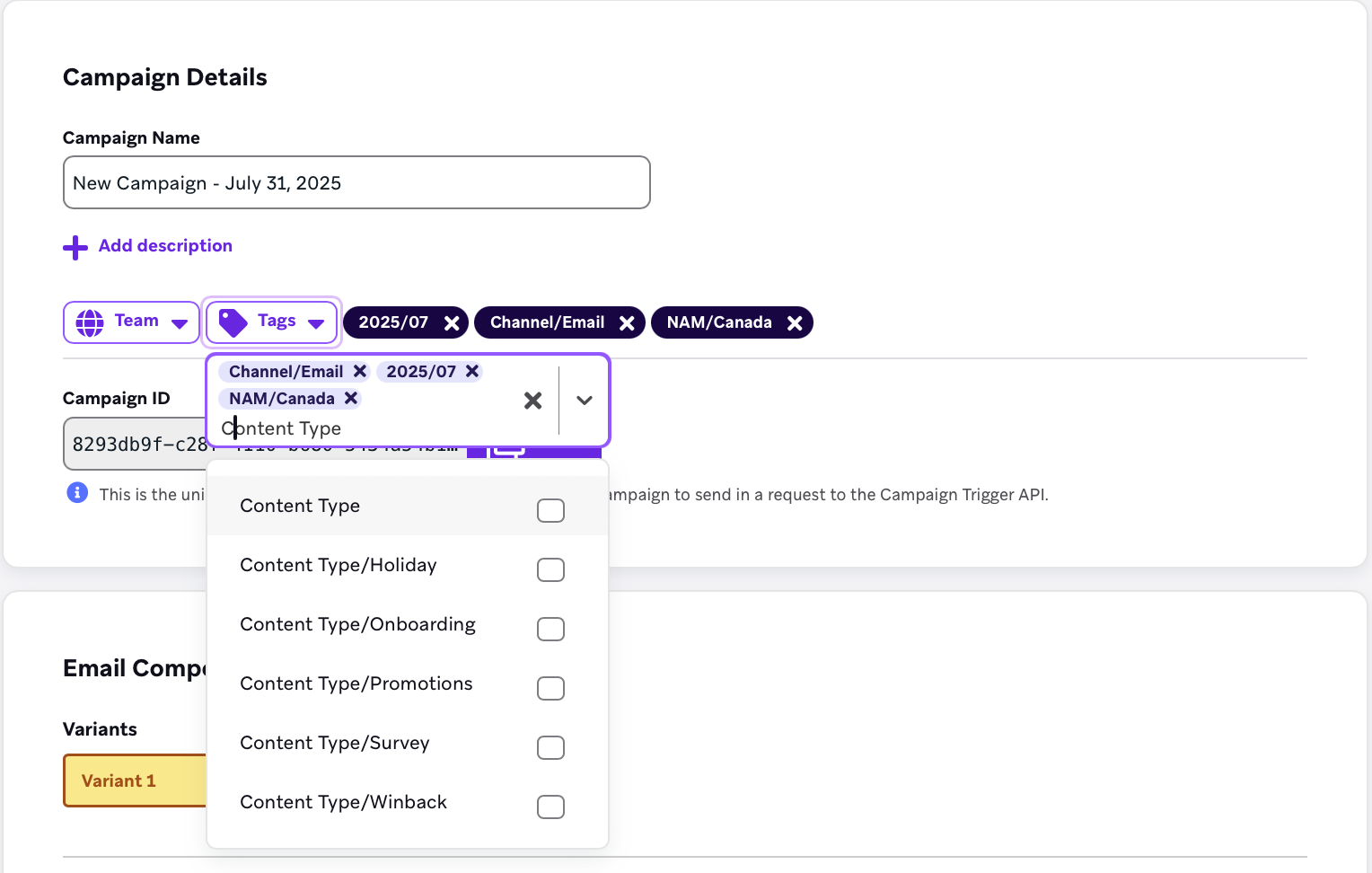
Image: Campaign Creation window with tagging drop-down

When you're managing marketing campaigns across multiple teams, regions, and channels, staying organized can feel like a full-time job.

Braze is packed with powerful tools, but without a clear system for tagging campaigns, even the most sophisticated marketing orgs end up with cluttered workspaces, duplicated efforts, and reporting headaches.

The fix? A smart, scalable tagging strategy.

At Stitch, we’ve helped global brands turn messy Braze setups into well-oiled machines using nothing more than well-planned tags. In this post, we’ll walk through how to build a tagging system that supports faster workflows, more reliable reporting, and better customer experiences.

Why Tagging Matters

Tags in Braze are simple metadata labels you can apply to campaigns and canvases, but don’t let their simplicity fool you. With up to 250 tags per campaign or canvas, they give you the flexibility to zoom in on specifics or roll up performance across broader themes, depending on your business goals.

When used strategically, tags become one of the most powerful tools in your Braze toolkit. They help you:

  • Organize content into clear, searchable categories
  • Filter and find campaigns quickly
  • Build dynamic segments based on tagged campaign interactions
  • Report across content types, channels, and regions
  • Throttle sends by message category to reduce fatigue and avoid over-messaging

Without a strong tagging system in place, things can get messy fast. Inconsistent naming conventions, fragmented reporting, and marketing teams guessing what went out (and when) are all signs it’s time to tighten things up.

Building a Tagging System That Works

Step 1: Define What Tagging Should Help You Achieve

Start by asking: What are we trying to solve with tagging?

Common goals include:

  • Making it easier to find and manage campaigns
  • Enabling dynamic retargeting or frequency caps by content and channel
  • Streamline regional, content, and channel-specific reporting
  • Reducing human error from inconsistent naming structures

Once you’re aligned on objectives, you can build a tagging system that supports these efforts.

Step 2: Build a Simple, Scalable Tag Hierarchy

The best tagging systems are easy to use and hard to mess up. At Stitch, we recommend a nested structure built around five core dimensions:

  1. Channel
    Email, Push (Standard, Rich, Story), IAM, SMS, Webhook, Multi-Channel
  2. Region / Market
    High-level tags like NAM, EMEA, APAC - then nest countries beneath each
  3. Purpose
    Always-On, Backend Automation, QA, Test, User Delete
  4. Content Type
    Onboarding, Retention, Promotions, Holidays, Partnerships, Winback, Transactional
  5. Date
    Use YYYY/MM format, like 2025/07, to keep it clean and sortable

This setup gives teams everything they need to work quickly while giving marketing ops and analytics teams the structure they need to scale.

Step 3: Standardize, Pre-Load, and Document Everything

One of the most common pitfalls we see is letting any dashboard user create new tags on the fly. That’s how you end up with “Promotions,” “promotion,” and “PROMO” all floating around your workspace as separate tags.

Avoid that mess by:

  • Pre-loading approved tags into Braze
  • Documenting your tag strategy in a shared guide
  • Defining clear rules around tag usage (and what’s not allowed)
  • Setting up a process for requesting new tags via ticketing systems

Bonus: this also helps ensure your marketers are not using tags that could reveal sensitive user behavior, which matters for teams with strict privacy or legal constraints.

Real-Life Example: How One Streaming Brand Scaled with Tags

One of our global streaming clients came to us with a tangle of campaigns across dozens of countries and business units. We helped them roll out a tagging system with consistent labels for:

  • Channels: 
    • Email, Push (Mobile/Web/CTV), IAM,  Webhook
  • Regions: 
    • NAM, APAC, EMEA, LATAM (with country and territory-level nesting)
  • Content Types: 
    • Onboarding, Retention, Promotions, Partnerships, Holiday, Transactional
  • Purpose: 
    • Always-On, Backend Update, QA, User Delete, Test
  • Date: 
    • Standard YYYY/MM format

With this in place, they could:

  • Search campaigns by market or content type in seconds
  • Generate clean engagement reports by combining tags
  • Elevate retargeting efforts for users who interacted with “Winback” content with follow-up touchpoints to capitalize on momentum
  • Limit how often users saw promotional messages across SMS and email
  • Use an ETL tool for surfacing their campaign tagging structure to their preferred BI tool  for better stakeholder visibility

How Tags Unlock Better Reporting and Smarter Messaging

Here’s where it all pays off:

  1. Clean Search & QA
    Teams can instantly pull campaigns tagged “region=EMEA” and/or “channel=Push” without needing to remember campaign naming conventions.
  2. Smarter Reporting
    Tags let you roll up results across campaigns. Want to see how all June “Promotion” emails performed in Canada? Just filter by tag.
  3. Dynamic Segmentation & Frequency Capping
    You can segment users who clicked on “Onboarding” messages in the past 30 days, or throttle users to no more than 2 “Holiday” messages per week. Nested tags with Frequency Capping and Segmentation lets you manage controls at the parent or nested-tag level.

TL;DR: Tagging Is Your Best Braze Power-Up

A good tagging system turns your Braze workspace into a high-performing marketing engine. It helps your team move faster, work smarter, and deliver better experiences to your customers.

So ask yourself:

  • What dimensions are most important for organizing our campaigns?
  • Are we using consistent tags across teams?
  • What would be easier if our tagging system were rock solid?

If your team’s ready to clean things up or scale with confidence, we’d love to help. Stitch has helped global brands build tagging systems that support serious growth. Yours could be next.

You might also like...